Introduction
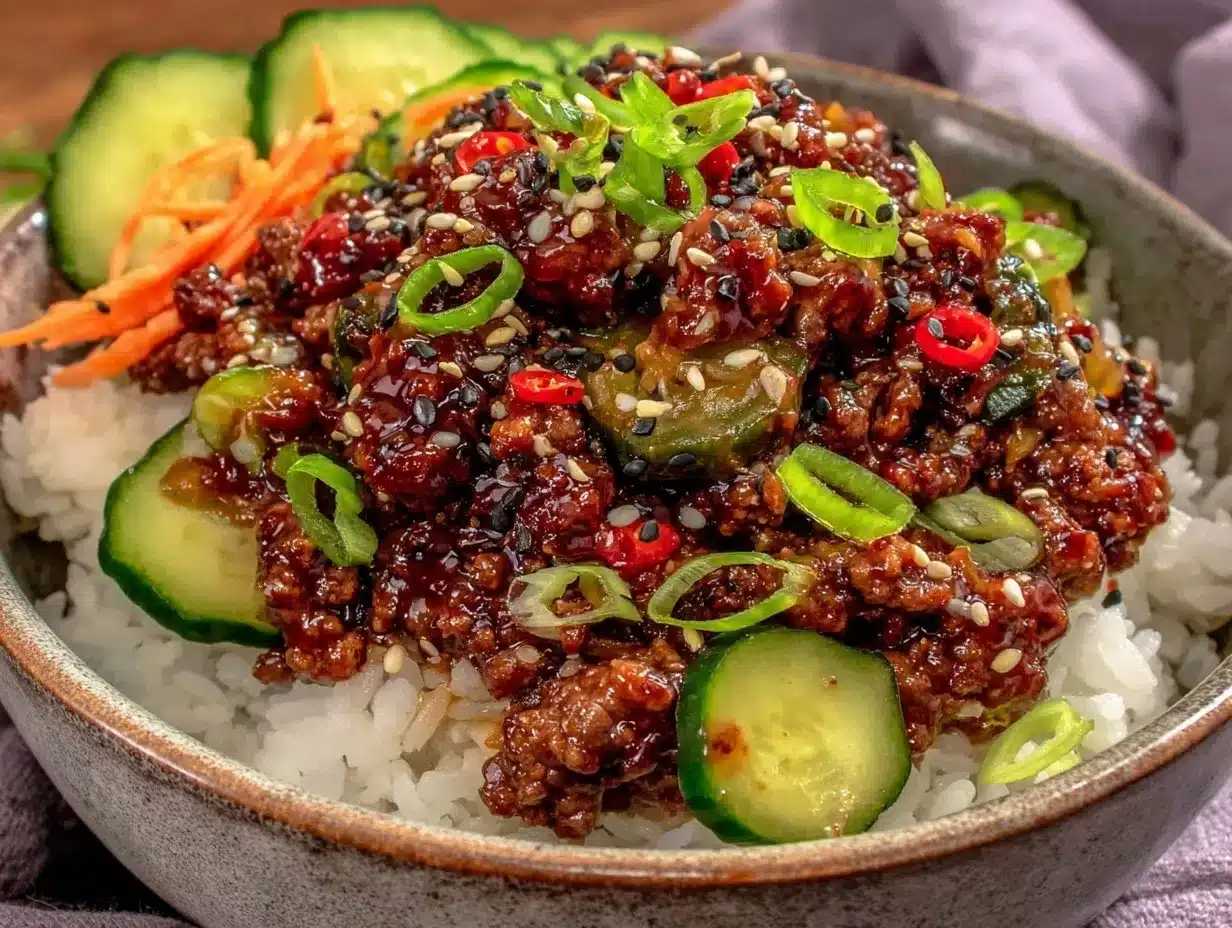
Sticky, glossy, and just the right amount of sheen — that’s the whole point of this Korean ground beef rice bowl. The way the rich, spicy-sweet gochujang glaze clings to each crumbly morsel of beef, pooling slightly around the edges of the bowl, is what made me obsessed with this dish. It’s not just about flavor here; it’s about that luscious texture you can almost see before you dig in. The tender grains of rice act like a soft bed, soaking up every drop of the sauce, while the beef itself offers a satisfying bite that’s both juicy and caramelized.
Honestly, I first stumbled on this recipe after a long day when all I craved was something comforting but with a bit of a kick. The moment the glistening beef hit the rice, and I saw just how well the sauce coated everything, I knew this dish was sticking around in my dinner rotation. It’s that rare meal that looks as good as it tastes, and that texture combo — tender rice, perfectly sauced beef, with a little crunch from fresh garnishes — keeps pulling me back.
What’s more, the gochujang glaze isn’t just a flavor punch; it’s a velvety hug for the ground beef, transforming a simple protein into something deeply satisfying. This dish has a way of making you slow down and appreciate every mouthful, and that quiet realization — that easy, tasty meals don’t have to be complicated — is why it stuck with me. If you’ve ever wanted a quick, flavorful bowl that rewards you with perfect texture and bold Korean flavors, this recipe’s got your name on it.
Why You’ll Love This Recipe
After testing this Korean ground beef rice bowl recipe multiple times, I can say it offers a beautiful balance of flavor and ease. Here’s why it’s become a favorite in my kitchen:
- Quick & Easy: Ready in under 30 minutes, this bowl is a lifesaver for busy weeknights or when you need dinner on the table fast.
- Simple Ingredients: You’re likely to have most of these pantry staples already, making last-minute cravings totally manageable.
- Perfect for Meal Prep: This dish reheats well, keeping its texture and flavor intact, ideal for prepping lunches or dinners ahead.
- Crowd-Pleaser: Whether it’s for picky eaters or adventurous palates, the balance of sweet, spicy, and savory hits the spot every time.
- Unbelievably Delicious: The gochujang glaze adds a silky heat that transforms simple ground beef into a mouthwatering centerpiece.
This recipe isn’t just a generic take on Korean flavors — the glaze is carefully balanced so it doesn’t overpower but instead brings out the natural umami of the beef. The method I settled on ensures the beef stays tender, never dry or tough, with just the right caramelization. Plus, the option to add quick pickled veggies or crunchy scallions gives it a freshness that keeps each bite exciting. It’s honestly the kind of meal that makes you pause and savor, the kind that sticks with you long after the bowl is empty.
What Ingredients You Will Need
This recipe uses straightforward, wholesome ingredients to create bold flavor and a satisfying texture without any fuss. Most are pantry staples, but a few Korean-specific staples like gochujang bring that authentic heat and depth.
- Ground beef: 1 pound (450g), preferably 80/20 for a good balance of flavor and fat
- Cooked rice: 4 cups (about 800g), jasmine or short-grain white rice works best for its sticky texture
- Gochujang (Korean chili paste): 2 tablespoons – this is the heart of the glaze; I recommend Chung Jung One brand for consistency
- Soy sauce: 2 tablespoons, for that salty depth
- Brown sugar: 1 tablespoon, to balance the heat with sweetness
- Garlic: 3 cloves, minced – fresh is essential for that punch
- Ginger: 1 teaspoon, grated – adds warmth and complexity
- Sesame oil: 1 teaspoon, for its nutty aroma and richness
- Vegetable oil: 1 tablespoon, for cooking the beef
- Green onions: 2, thinly sliced, for garnish and freshness
- Sesame seeds: 1 teaspoon, toasted, for a subtle crunch and flavor
- Optional toppings: Sliced cucumbers or quick pickled carrots for brightness
Substitution tips: If you want a leaner option, turkey or chicken mince works well but won’t have quite the same richness. For gluten-free diets, swap soy sauce with tamari or coconut aminos. And if you don’t have gochujang on hand, a mix of chili paste and a touch of miso can work in a pinch, though the flavor won’t be quite the same.
Equipment Needed
- Large non-stick skillet or sauté pan – crucial for browning the ground beef evenly without sticking
- Measuring spoons and cups – for accurate ingredient ratios
- Mixing bowl – to whisk together the glaze ingredients
- Rice cooker or pot – for perfectly cooked rice (or use leftover rice)
- Small whisk or fork – to blend the gochujang glaze smoothly
- Sharp knife and cutting board – for prepping garlic, ginger, and green onions
If you don’t have a non-stick skillet, a well-seasoned cast iron pan works beautifully but watch the heat to avoid burning the glaze. I personally like using a silicone spatula to stir the beef gently without breaking it up too much. For budget-friendly options, any medium-sized frying pan will do just fine as long as it distributes heat evenly.
Preparation Method
- Cook the rice: Start by cooking 4 cups (800g) of jasmine or short-grain rice as per package instructions. This usually takes about 20 minutes. Fluff it with a fork once done and keep warm while you prepare the beef.
- Make the glaze: In a small bowl, whisk together 2 tablespoons gochujang, 2 tablespoons soy sauce, 1 tablespoon brown sugar, 3 minced garlic cloves, 1 teaspoon grated ginger, and 1 teaspoon sesame oil until smooth. Set aside.
- Brown the beef: Heat 1 tablespoon vegetable oil in a large skillet over medium-high heat. Add 1 pound (450g) ground beef and cook, breaking it apart gently with a spatula, until browned and no longer pink, about 6-8 minutes. Drain excess fat if needed.
- Add the glaze: Pour the prepared gochujang sauce over the beef. Stir well to coat evenly. Reduce heat to medium-low and cook for another 3-4 minutes, allowing the sauce to thicken slightly and caramelize onto the beef.
- Check seasoning: Taste the beef mixture and adjust with a pinch more sugar or soy sauce if needed. The flavor should be balanced — sweet, salty, and with a gentle spicy kick.
- Prepare garnishes: While the beef simmers, thinly slice 2 green onions and toast 1 teaspoon sesame seeds in a dry pan over medium heat until fragrant and lightly browned (about 1-2 minutes). Optional: slice cucumbers or quick pickle carrots by soaking them in vinegar and sugar for 10 minutes.
- Assemble the bowls: Divide the warm rice between 4 bowls. Spoon the gochujang-glazed beef generously on top. Sprinkle with green onions and toasted sesame seeds. Add any optional fresh or pickled veggies for extra texture and brightness.
Pro tip: If you want even better flavor, let the beef and glaze rest for 5 minutes off the heat before serving — it helps the sauce thicken and flavors deepen. Watch the beef closely when adding the glaze to avoid burning the sugars, stirring frequently.
Cooking Tips & Techniques
One trick I learned early on is not to over-stir the beef while it’s browning. Letting it sit for a minute or two before breaking it up encourages nice caramelization, which adds depth to the flavor. Also, cooking on medium-high heat helps the glaze reduce quickly without drying out the meat.
Be careful with the gochujang — it packs heat, but it’s also sweet and savory. Start with the recommended amount and adjust after tasting. If your glaze looks too thick, a splash of water can loosen it up without losing flavor.
Another tip is to toast the sesame seeds separately — it brings out their nuttiness in a way you can’t get from just adding them raw. And if you’re pressed for time, using leftover rice from the fridge actually works great here, because it’s drier and soaks up the sauce without getting mushy.
Multitasking is key. While the rice cooks, prep the glaze and veggies so you can pull everything together quickly. If you want to keep things extra fresh, add garnishes just before serving to maintain their crunch.
Variations & Adaptations
This Korean ground beef rice bowl is flexible and welcomes some creative spins. Here are a few ideas:
- Vegetarian version: Swap ground beef for crumbled tofu or tempeh and use a splash of soy sauce to build umami. Try the crispy teriyaki tofu stir fry for a related plant-based option.
- Spicy level adjustments: Add more gochujang or a dash of Korean chili flakes (gochugaru) if you like it hotter, or mellow it with a drizzle of honey or extra brown sugar.
- Grain swaps: Use brown rice, quinoa, or even cauliflower rice for a lower-carb twist. For a protein-packed alternative, try pairing this bowl with the healthy high-protein quinoa and black bean salad.
- Additional veggies: Stir in sautéed mushrooms, spinach, or bell peppers for more color and nutrients.
One variation I personally enjoy is adding a fried egg on top — the runny yolk blends into the beef and rice, creating a silky texture that’s just dreamy. It turns this bowl from quick dinner to indulgent comfort food in seconds.
Serving & Storage Suggestions
This Korean ground beef rice bowl is best served hot, right after cooking, so you experience the full contrast of textures — tender meat, fluffy rice, and crunchy garnishes. For an eye-catching presentation, arrange the beef neatly over the rice, sprinkle the garnishes artfully, and add a side of quick pickled vegetables for brightness.
Pair this bowl with a crisp cucumber salad or refreshing drinks like the cucumber mint detox water for a light balance to the hearty flavors.
Leftovers keep well in an airtight container in the fridge for up to 3 days. When reheating, add a splash of water or broth to keep the rice moist and warm gently on the stove or in the microwave. Flavors tend to develop and deepen overnight, so sometimes the next-day bowl tastes even better.
Nutritional Information & Benefits
Per serving, this Korean ground beef rice bowl provides a balanced meal with approximately 450-500 calories, 25-30 grams of protein, moderate fat from the beef, and carbohydrates from the rice. The gochujang paste contains fermented ingredients, which have beneficial probiotics, and garlic and ginger add anti-inflammatory properties.
This recipe fits well into a balanced diet, especially when paired with fresh vegetables or a side salad. It’s naturally gluten-free if you choose gluten-free soy sauce and contains no added preservatives. For those mindful of sodium, consider using low-sodium soy sauce and adjusting the glaze accordingly.
Conclusion
This flavorful Korean ground beef rice bowl with gochujang glaze is the kind of meal that satisfies on every level — texture, taste, and simplicity. It’s a recipe that invites you to make it your own, whether by adding veggies, swapping grains, or adjusting the spice to fit your mood.
For me, it’s become a reliable weeknight staple that’s anything but boring. The way that silky, spicy glaze coats the beef still gets me every time. If you try it, I’d love to hear how you customize your bowl or what garnishes you add to make it uniquely yours. Cooking should be fun and flexible, and this recipe delivers that in spades.
Give it a go and see how a simple ground beef bowl can quickly become a favorite in your meal lineup!
FAQs
Can I make this Korean ground beef rice bowl ahead of time?
Yes! The beef and rice can be cooked in advance and stored separately in the fridge for up to 3 days. Reheat gently with a splash of water to keep the rice fluffy.
What can I substitute for gochujang if I can’t find it?
Try mixing a tablespoon of chili paste or sriracha with a teaspoon of miso paste and a bit of honey or brown sugar to mimic the sweet, spicy, and umami flavors.
Is this recipe gluten-free?
It can be if you use gluten-free soy sauce or tamari. Most other ingredients are naturally gluten-free.
Can I use ground turkey or chicken instead of beef?
Absolutely! Ground turkey or chicken works well, though the flavor will be milder and leaner. Add a little extra seasoning or oil for richness.
What sides pair well with this rice bowl?
Fresh or pickled vegetables like cucumbers, carrots, or a simple green salad work beautifully. A light drink like cucumber mint detox water complements the spicy glaze perfectly.
Pin This Recipe!
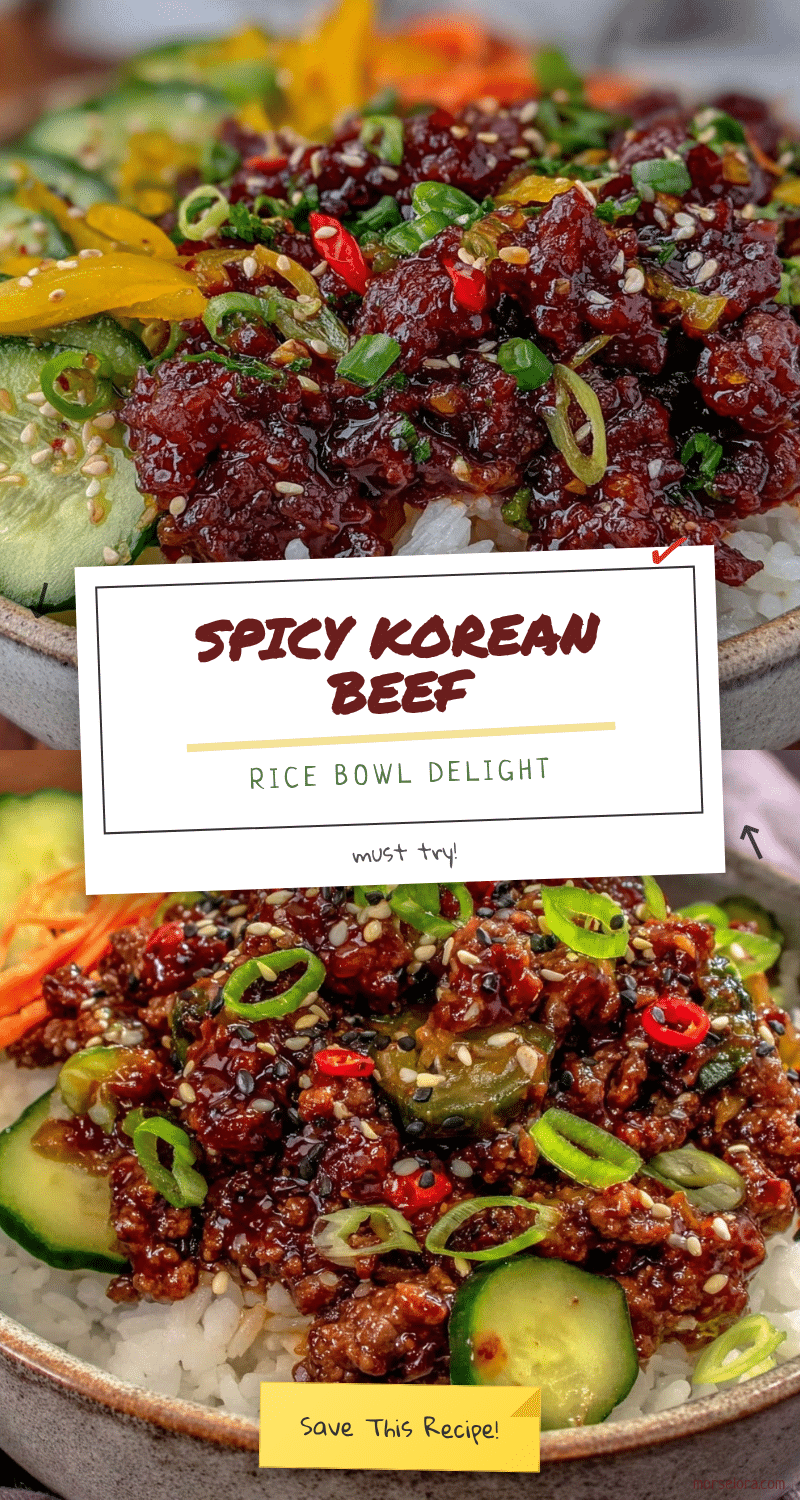
Flavorful Korean Ground Beef Rice Bowl Recipe with Easy Gochujang Glaze
A quick and easy Korean ground beef rice bowl featuring a rich, spicy-sweet gochujang glaze that coats tender beef and is served over sticky jasmine rice with fresh garnishes.
- Prep Time: 10 minutes
- Cook Time: 20 minutes
- Total Time: 30 minutes
- Yield: 4 servings 1x
- Category: Main Course
- Cuisine: Korean
Ingredients
- 1 pound (450g) ground beef, preferably 80/20
- 4 cups (about 800g) cooked jasmine or short-grain white rice
- 2 tablespoons gochujang (Korean chili paste)
- 2 tablespoons soy sauce
- 1 tablespoon brown sugar
- 3 cloves garlic, minced
- 1 teaspoon grated ginger
- 1 teaspoon sesame oil
- 1 tablespoon vegetable oil
- 2 green onions, thinly sliced
- 1 teaspoon toasted sesame seeds
- Optional toppings: sliced cucumbers or quick pickled carrots
Instructions
- Cook 4 cups (800g) of jasmine or short-grain rice according to package instructions, about 20 minutes. Fluff with a fork and keep warm.
- In a small bowl, whisk together 2 tablespoons gochujang, 2 tablespoons soy sauce, 1 tablespoon brown sugar, 3 minced garlic cloves, 1 teaspoon grated ginger, and 1 teaspoon sesame oil until smooth. Set aside.
- Heat 1 tablespoon vegetable oil in a large skillet over medium-high heat. Add 1 pound ground beef and cook, breaking it apart gently, until browned and no longer pink, about 6-8 minutes. Drain excess fat if needed.
- Pour the prepared gochujang glaze over the beef. Stir well to coat evenly. Reduce heat to medium-low and cook for another 3-4 minutes, allowing the sauce to thicken and caramelize.
- Taste and adjust seasoning with more sugar or soy sauce if needed.
- While beef simmers, thinly slice 2 green onions and toast 1 teaspoon sesame seeds in a dry pan over medium heat until fragrant, about 1-2 minutes. Prepare optional pickled veggies if desired.
- Divide warm rice between 4 bowls. Spoon gochujang-glazed beef on top. Sprinkle with green onions and toasted sesame seeds. Add optional fresh or pickled veggies for brightness.
Notes
Do not over-stir the beef while browning to encourage caramelization. Toast sesame seeds separately for better flavor. Use leftover rice for better texture. Let beef and glaze rest 5 minutes off heat for thicker sauce and deeper flavor. Adjust gochujang amount to control spice level.
Nutrition
- Serving Size: 1 bowl (approximatel
- Calories: 475
- Sugar: 8
- Sodium: 700
- Fat: 22
- Saturated Fat: 8
- Carbohydrates: 45
- Fiber: 2
- Protein: 28
Keywords: Korean ground beef, gochujang glaze, rice bowl, quick dinner, easy Korean recipe, spicy beef bowl, weeknight meal