It was 11:47 PM on a random Thursday in October, and I had a very specific, almost desperate craving for mac and cheese. The kind of mac and cheese that’s creamy, cheesy, and feels like a warm hug. But here’s the thing—I didn’t have any pasta in the house. I mean, I had a box of orzo, but that felt wrong. I did, however, have a massive butternut squash sitting on my counter that I’d bought on a whim at the farmers market three days prior. And I had a bunch of sage that was starting to look a little sad. So, in that sleepy, slightly impulsive state, I decided to roast the squash and blend it into a sauce. Honestly, I thought it was going to be a disaster. I mean, a vegetable-based cheese sauce? At midnight? But let me tell you, the moment that first forkful hit my mouth, I knew I had stumbled onto something special. It was creamy, it was rich, and it had this subtle sweetness that played perfectly with the sharp cheddar. And the crispy sage on top? That was a last-minute whim that turned into a signature move. This is the kind of recipe that happens when you stop overthinking and just let your cravings guide you.
Why You’ll Love This Recipe
This isn’t just another mac and cheese recipe. This is the one you’ll bring to every potluck, every holiday dinner, and every casual get-together where you want to hear people say, “Wow, who made this?” It’s a crowd-pleaser in the truest sense of the word.
- Quick & Easy: The sauce comes together in about 10 minutes after the squash is roasted. You can even roast the squash a day ahead to save time before your guests arrive.
- Simple Ingredients: No weird, hard-to-find ingredients here. Just butternut squash, sharp cheddar, pasta, and a few pantry staples. You probably have most of this already.
- Perfect for Hosting: This dish is a showstopper at dinner parties. It looks fancy (hello, crispy sage topping), but it’s secretly low-effort. Prep it before guests arrive and pop it in the oven when they’re ready to eat.
- Crowd-Pleaser: I’ve served this to kids, picky eaters, and even a friend who “doesn’t like squash.” Every single person went back for seconds. It’s that good.
- Unbelievably Delicious: The texture is next-level—creamy from the blended squash, gooey from the cheese, and topped with that irresistible crunch from the fried sage. It’s comfort food, but it feels a little bit fancy.
What makes this recipe different from the rest is the technique. Instead of making a traditional roux-based cheese sauce, we’re using roasted butternut squash as the base. This not only adds a ton of flavor and nutrients, but it also creates an incredibly smooth, velvety sauce that coats every single piece of pasta. No grainy sauces here, folks. Plus, the crispy sage adds a savory, herbaceous crunch that cuts through the richness perfectly. This isn’t just another version of mac and cheese—it’s the best version.
Honestly, this recipe is the kind that makes you close your eyes after the first bite. It’s comfort food reimagined—healthier, faster, but with the same soul-soothing satisfaction. Perfect for impressing guests without stress, or turning a simple weeknight dinner into something memorable.
What Ingredients You Will Need
This recipe uses simple, wholesome ingredients that work together to create something truly special. Most of these are pantry staples or easy to find at your local grocery store. The beauty is in how they come together.
- For the Roasted Butternut Squash:
- 1 medium butternut squash, peeled, seeded, and cubed (about 4 cups) – (look for one that feels heavy for its size)
- 2 tablespoons olive oil – (I use extra virgin for roasting)
- 1/2 teaspoon salt
- 1/4 teaspoon black pepper
- For the Cheese Sauce:
- 2 cups milk (whole milk works best, but 2% is fine) – (adds creaminess)
- 1 cup heavy cream – (for that extra luxurious texture)
- 3 cups sharp cheddar cheese, shredded – (I prefer Tillamook or Cabot for best melting)
- 1 cup Gruyère cheese, shredded – (adds a nutty, complex flavor)
- 1/2 cup grated Parmesan cheese – (for a salty, umami kick)
- 3 cloves garlic, minced
- 1 teaspoon Dijon mustard – (trust me on this—it brightens the whole dish)
- 1/2 teaspoon smoked paprika
- 1/4 teaspoon nutmeg, freshly grated – (optional, but highly recommended)
- Salt and pepper to taste
- For the Pasta:
- 1 pound (16 ounces) elbow macaroni or cavatappi – (cavatappi holds the sauce beautifully)
- For the Crispy Sage Topping:
- 1/4 cup unsalted butter
- 20-25 fresh sage leaves
- 1/2 cup panko breadcrumbs – (for extra crunch)
- 1/4 cup grated Parmesan cheese – (for the topping)
Ingredient Selection Tips: When choosing butternut squash, look for one that’s firm with no soft spots. The skin should be a uniform tan color. For the cheese, I recommend buying blocks and shredding them yourself—pre-shredded cheese has anti-caking agents that can make the sauce grainy. If you’re in a pinch, you can swap the Gruyère for more cheddar or even Gouda. For a dairy-free option, use unsweetened oat milk and dairy-free cheese alternatives, though the texture will be slightly different.
Equipment Needed
You don’t need a fancy kitchen to pull this off, but having the right tools makes the process so much smoother. Here’s what you’ll need:
- Baking Sheet: For roasting the butternut squash. A rimmed one is best to catch any juices.
- Large Pot: For boiling the pasta. You’ll also use this to combine everything later.
- Blender or Food Processor: To puree the roasted squash into a silky smooth sauce. I use my Vitamix, but any blender will work—just make sure to let the squash cool slightly before blending.
- Large Skillet: For making the crispy sage and breadcrumb topping. A non-stick skillet works great here.
- 9×13-inch Baking Dish: For assembling and baking the mac and cheese. A glass or ceramic dish is ideal for even heating.
- Cheese Grater: Please, for the love of all things cheesy, grate your own cheese. A box grater or food processor attachment works perfectly.
- Wooden Spoon or Silicone Spatula: For stirring the sauce and pasta together.
If you don’t have a blender, you can mash the roasted squash with a potato masher until smooth—it just won’t be quite as velvety. Also, if you don’t have a 9×13 dish, you can use a large cast-iron skillet or even individual ramekins for a fun presentation.
Preparation Method
- Roast the Butternut Squash (30 minutes): Preheat your oven to 400°F (200°C). On a baking sheet, toss the cubed butternut squash with olive oil, salt, and pepper. Spread it in a single layer and roast for 25-30 minutes, flipping halfway through, until the squash is tender and lightly caramelized around the edges. You’ll know it’s done when you can easily pierce a piece with a fork. Let it cool for about 5 minutes.
- Cook the Pasta (10 minutes): While the squash is roasting, bring a large pot of salted water to a boil. Add the pasta and cook according to package directions until al dente—usually about 8-9 minutes. Drain the pasta, but don’t rinse it! Rinsing removes the starch that helps the sauce stick. Set the pasta aside in the colander.
- Make the Squash Puree (5 minutes): Transfer the roasted squash to a blender. Add 1 cup of the milk and blend on high until completely smooth. You’re looking for a consistency similar to canned pumpkin puree. If it’s too thick, add a splash more milk. Set aside.
- Prepare the Cheese Sauce (10 minutes): In the same large pot you used for the pasta (less dishes, hooray!), melt 2 tablespoons of butter over medium heat. Add the minced garlic and sauté for about 30 seconds until fragrant—don’t let it burn. Whisk in the remaining 1 cup of milk and the heavy cream. Bring the mixture to a gentle simmer, then reduce the heat to low. Gradually add the shredded cheddar, Gruyère, and 1/2 cup Parmesan cheese, stirring constantly until fully melted and smooth. Stir in the Dijon mustard, smoked paprika, and nutmeg (if using). Now, whisk in the butternut squash puree until everything is well combined. Season with salt and pepper to taste. The sauce should be thick, creamy, and a beautiful golden-orange color.
- Combine Pasta and Sauce (2 minutes): Add the drained pasta to the pot with the cheese sauce. Gently fold everything together until every piece of pasta is coated. Don’t overmix or the pasta might break. Pour the mixture into a greased 9×13-inch baking dish and spread it into an even layer.
- Make the Crispy Sage Topping (5 minutes): In a small skillet, melt the remaining 1/4 cup of butter over medium heat. Add the sage leaves and cook for about 30-60 seconds per side, until they turn dark green and crispy. Be careful—they burn quickly! Use a slotted spoon to transfer the crispy sage leaves to a paper towel-lined plate. In the same skillet, add the panko breadcrumbs and stir them in the remaining butter for about 2 minutes, until golden brown. Remove from heat and stir in the remaining 1/4 cup of Parmesan cheese.
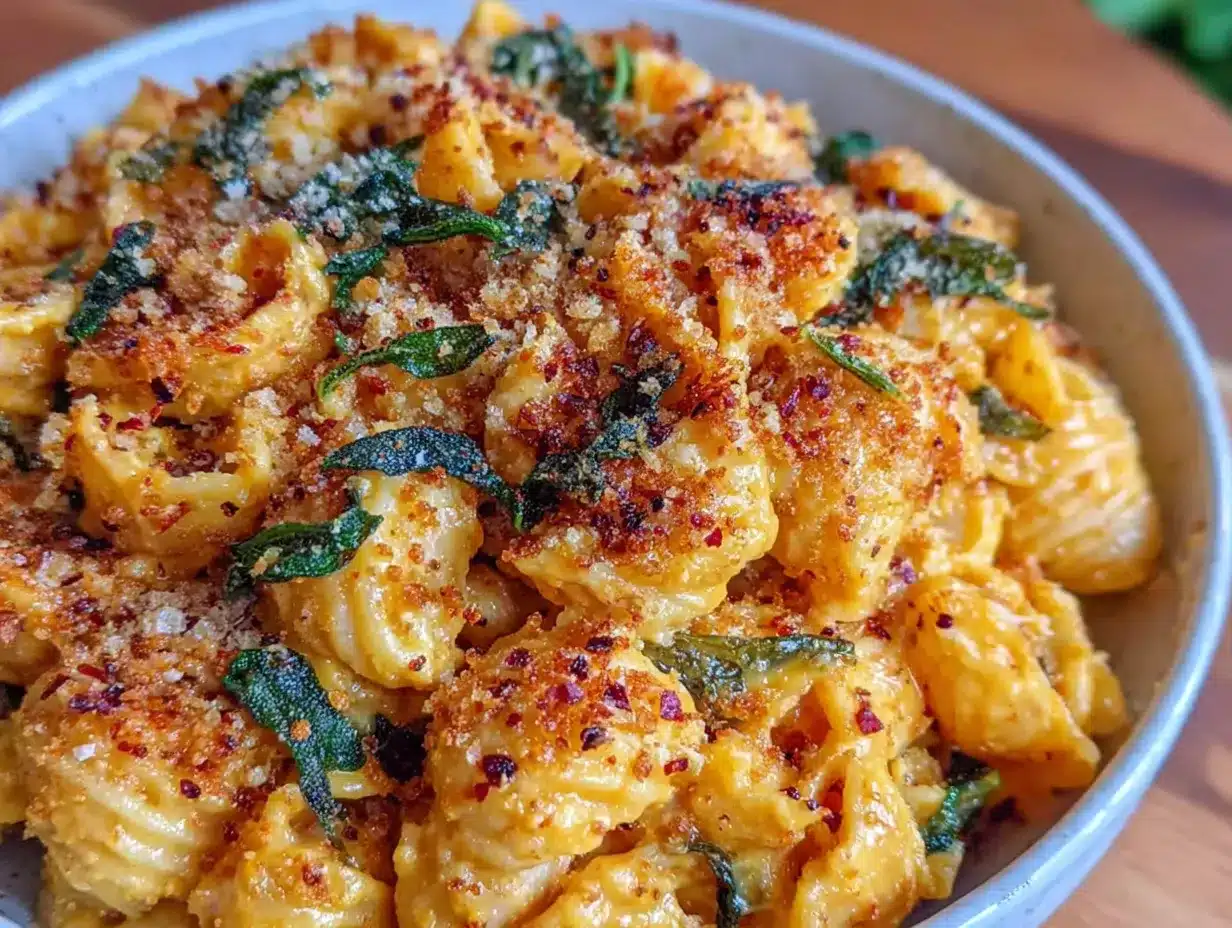
- Assemble and Bake (20 minutes): Preheat your oven to 375°F (190°C). Sprinkle the toasted breadcrumb mixture evenly over the mac and cheese. Crumble the crispy sage leaves on top. Bake for 15-20 minutes, until the top is golden and the edges are bubbly. Let it rest for 5 minutes before serving—this helps the sauce set slightly so it doesn’t run all over the plate.
Troubleshooting Tip: If your sauce seems too thick before baking, add a splash of milk. If it’s too thin, let it simmer for an extra minute or two to thicken. The sauce should coat the back of a spoon.
Cooking Tips & Techniques
I’ve made this recipe about a dozen times (no joke), and I’ve learned a few things along the way. Here are my best tips to make sure yours turns out perfect every single time.
Don’t Overcook the Pasta. This is the number one mistake I see people make. Cook your pasta to al dente—firm to the bite. It will continue to cook in the oven, so if you start with mushy pasta, you’ll end up with a sad, gummy casserole. Trust me, I learned this the hard way when I was rushing for a dinner party.
Grate Your Own Cheese. I know, I know, it’s an extra step. But pre-shredded cheese contains cellulose and anti-caking agents that prevent it from melting smoothly. Your sauce will be grainy instead of silky. Take the 5 minutes to grate your own. Your taste buds will thank you.
Toast the Squash Well. The caramelization on the roasted squash adds a depth of flavor that you just can’t get from boiling or steaming. Don’t rush this step. You want those edges to be golden brown and slightly crispy. It makes the sauce taste richer and more complex.
Season in Layers. Don’t just add salt at the end. Season the squash before roasting, season the pasta water (it should taste like the sea), and season the sauce as you go. Layering the seasoning creates a more balanced, flavorful dish.
Let It Rest. This is the hardest part, but it’s essential. After you pull the dish from the oven, let it sit for 5-10 minutes. This allows the sauce to set and the flavors to meld together. If you dig in immediately, it will be runny and the layers won’t hold together.
Make Ahead Tip: You can assemble the entire dish (without the topping) up to 24 hours in advance. Cover and refrigerate. When you’re ready to bake, add the breadcrumb and sage topping and bake for an extra 5-10 minutes since it’s starting from cold.
Variations & Adaptations
One of the things I love about this recipe is how versatile it is. You can tweak it to fit almost any dietary need or flavor preference. Here are a few variations I’ve tried and loved.
Gluten-Free Version: Swap the regular pasta for your favorite gluten-free pasta. I’ve used chickpea pasta and brown rice pasta with great success. Just be careful not to overcook it—gluten-free pasta tends to get mushy faster. Use gluten-free panko breadcrumbs for the topping.
Dairy-Free Version: Use unsweetened oat milk or cashew milk in place of the dairy milk and cream. For the cheese, use a high-quality dairy-free cheddar shreds—I like Violife or Miyoko’s. The sauce won’t be quite as creamy, but it’s still delicious. Use vegan butter for the topping.
Add Some Protein: This mac and cheese is amazing on its own, but it’s also a great base for add-ins. Try stirring in 2 cups of shredded rotisserie chicken, cooked crumbled bacon, or even leftover pulled pork before baking. It turns it into a complete meal.
Spicy Kick: If you like heat, add 1/2 teaspoon of cayenne pepper or red pepper flakes to the cheese sauce. You can also top it with some chopped pickled jalapeños before baking for a tangy, spicy crunch.
Seasonal Twist: In the fall, swap the butternut squash for roasted pumpkin or sweet potato. In the spring, try adding a cup of steamed broccoli or peas to the mix. The recipe is incredibly forgiving and adaptable.
My Personal Favorite Variation: I once added a handful of caramelized onions to the sauce before blending the squash. It added this incredible sweetness and depth that was absolutely next-level. I haven’t done it since, but I think about it often. Maybe tonight’s the night.
Serving & Storage Suggestions
This mac and cheese is a star on its own, but here’s how to make it shine even brighter at your next gathering.
Serving Temperature: Serve it hot, straight from the oven. The cheese should be gooey and the top should be golden and crunchy. Let it rest for 5 minutes so it’s not lava-hot, but don’t let it sit too long or the sauce will start to set.
Presentation: For a dinner party, I like to serve it directly from the baking dish on a trivet—it looks rustic and inviting. Garnish with a few extra crispy sage leaves on top and a sprinkle of flaky sea salt. The contrast of the green sage against the golden-orange mac and cheese is gorgeous.
What to Serve Alongside: This dish is rich, so I like to balance it with something fresh. A simple green salad with a lemon vinaigrette is perfect. Or some roasted Brussels sprouts with balsamic glaze. For drinks, a crisp white wine like Sauvignon Blanc or a light beer cuts through the creaminess beautifully.
Storage: Leftovers can be stored in an airtight container in the refrigerator for up to 4 days. The breadcrumb topping will lose its crunch, but the flavors will actually meld and deepen. To reheat, place individual portions in the microwave for 1-2 minutes, or reheat the whole dish in a 350°F oven for 15-20 minutes, covered with foil to prevent drying out.
Freezing: This mac and cheese freezes beautifully. Assemble the dish completely (including the topping) but don’t bake it. Wrap the dish tightly in plastic wrap and then foil, and freeze for up to 3 months. When you’re ready to bake, thaw it overnight in the refrigerator, then bake as directed, adding 10-15 minutes to the baking time since it’s starting from cold.
Flavor Development: Honestly, this dish tastes even better the next day. The flavors have time to meld together, and the sauce thickens up beautifully. I often make it a day ahead on purpose.
Nutritional Information & Benefits
This mac and cheese is comfort food, but it’s comfort food with a few hidden benefits. Here’s the breakdown for one serving (about 1 cup, based on 8 servings).
| Nutrient | Amount per Serving |
|---|---|
| Calories | 520 |
| Total Fat | 28g |
| Saturated Fat | 16g |
| Cholesterol | 80mg |
| Sodium | 680mg |
| Total Carbohydrates | 48g |
| Dietary Fiber | 4g |
| Sugars | 6g |
| Protein | 22g |
| Vitamin A | 180% DV |
| Vitamin C | 25% DV |
| Calcium | 45% DV |
| Iron | 10% DV |
Health Benefits: Butternut squash is packed with Vitamin A (over 180% of your daily needs per serving), which is great for eye health and immune function. It’s also a good source of fiber, which helps with digestion and keeps you feeling full. The cheese provides calcium for strong bones, and the sage has anti-inflammatory properties. Is it a health food? No. But it’s a heck of a lot better for you than boxed mac and cheese, and it feels indulgent without the guilt.
Dietary Considerations: This recipe contains gluten and dairy. For a gluten-free version, use gluten-free pasta and breadcrumbs. For a dairy-free version, use plant-based milk and cheese alternatives. It’s also vegetarian-friendly as written.
Conclusion
This Crowd-Pleasing Butternut Squash Mac and Cheese with Crispy Sage is more than just a recipe—it’s a secret weapon for any host. It’s the dish that makes people stop mid-conversation and ask, “Wait, what’s in this?” It’s creamy, it’s crunchy, it’s savory with a hint of sweetness, and it’s surprisingly easy to pull off. Whether you’re hosting a holiday dinner, a casual potluck, or just a Tuesday night that needs a little extra comfort, this is the recipe you’ll reach for.
I honestly love this recipe because it feels like a happy accident that turned into a staple. It’s proof that sometimes the best things happen when you’re just winging it at 11 PM on a Thursday. So go ahead, make it your own. Add your favorite cheese, throw in some bacon, or keep it exactly as written. Either way, I promise you’ll be scraping the dish for every last bit of that crispy sage topping.
I’d love to hear how it turns out for you! Drop a comment below and let me know if you made any fun variations. And if you loved it, don’t forget to share this recipe with a friend who needs a little comfort food in their life. Happy cooking!
Frequently Asked Questions
Can I use pre-cut butternut squash from the store?
Absolutely! Pre-cut squash saves a ton of time. Just look for fresh, firm cubes in the produce section. Frozen cubed squash also works—just thaw and pat dry before roasting to avoid excess moisture.
Can I make this without a blender?
Yes, you can. If you don’t have a blender, mash the roasted squash with a potato masher or fork until smooth. It won’t be quite as silky, but it will still taste amazing. You can also use an immersion blender directly in the pot.
Why did my sauce turn out grainy?
Grainy sauce is usually caused by overheating the cheese or using pre-shredded cheese. Always use freshly grated cheese and melt it over low heat, stirring constantly. High heat can cause the proteins in the cheese to seize up and become grainy.
Can I skip the crispy sage topping?
You can, but honestly, it’s the best part! The crispy sage adds a savory crunch that balances the creamy mac and cheese. If you’re in a rush, just top with buttered breadcrumbs and skip the sage, but you’ll be missing out on that amazing flavor.
How do I reheat leftovers without drying them out?
The best way is to reheat in the oven. Place the mac and cheese in a baking dish, add a splash of milk, cover with foil, and bake at 350°F for 15-20 minutes. The foil traps steam and keeps it creamy. For single servings, the microwave works fine—just add a splash of milk before heating.
PrintEasy Crowd-Pleasing Butternut Squash Mac and Cheese

This creamy, cheesy mac and cheese uses roasted butternut squash as the base for a velvety sauce, topped with crispy sage and breadcrumbs. It’s a crowd-pleasing comfort dish that’s surprisingly easy to make.
- Prep Time: 15 minutes
- Cook Time: 30 minutes
- Total Time: 45 minutes
- Yield: 8 servings 1x
- Category: Main Course
- Cuisine: American
Ingredients
- 1 medium butternut squash, peeled, seeded, and cubed (about 4 cups)
- 2 tablespoons olive oil
- 1/2 teaspoon salt
- 1/4 teaspoon black pepper
- 2 cups milk (whole milk works best, but 2% is fine)
- 1 cup heavy cream
- 3 cups sharp cheddar cheese, shredded
- 1 cup Gruyère cheese, shredded
- 1/2 cup grated Parmesan cheese
- 3 cloves garlic, minced
- 1 teaspoon Dijon mustard
- 1/2 teaspoon smoked paprika
- 1/4 teaspoon nutmeg, freshly grated (optional)
- Salt and pepper to taste
- 1 pound (16 ounces) elbow macaroni or cavatappi
- 1/4 cup unsalted butter
- 20–25 fresh sage leaves
- 1/2 cup panko breadcrumbs
- 1/4 cup grated Parmesan cheese (for topping)
Instructions
- Preheat oven to 400°F (200°C). On a baking sheet, toss cubed butternut squash with olive oil, salt, and pepper. Spread in a single layer and roast for 25-30 minutes, flipping halfway, until tender and caramelized. Let cool for 5 minutes.
- While squash roasts, bring a large pot of salted water to a boil. Cook pasta according to package directions until al dente. Drain (do not rinse) and set aside.
- Transfer roasted squash to a blender. Add 1 cup of milk and blend on high until completely smooth. Set aside.
- In the same large pot, melt 2 tablespoons of butter over medium heat. Add minced garlic and sauté for 30 seconds until fragrant. Whisk in remaining 1 cup milk and heavy cream. Bring to a gentle simmer, then reduce heat to low. Gradually add shredded cheddar, Gruyère, and 1/2 cup Parmesan, stirring constantly until melted and smooth. Stir in Dijon mustard, smoked paprika, and nutmeg (if using). Whisk in squash puree until combined. Season with salt and pepper.
- Add drained pasta to the pot with cheese sauce. Gently fold until every piece is coated. Pour into a greased 9×13-inch baking dish and spread evenly.
- In a small skillet, melt remaining 1/4 cup butter over medium heat. Add sage leaves and cook for 30-60 seconds per side until crispy. Transfer to a paper towel-lined plate. In the same skillet, add panko breadcrumbs and stir for 2 minutes until golden brown. Remove from heat and stir in remaining 1/4 cup Parmesan.
- Preheat oven to 375°F (190°C). Sprinkle breadcrumb mixture evenly over mac and cheese. Crumble crispy sage leaves on top. Bake for 15-20 minutes until golden and bubbly. Let rest for 5 minutes before serving.
Notes
For best results, grate your own cheese to avoid graininess. The sauce should coat the back of a spoon. Let the dish rest for 5 minutes after baking to set. Can be assembled up to 24 hours in advance (without topping) and refrigerated.
Nutrition
- Serving Size: 1 cup
- Calories: 520
- Sugar: 6
- Sodium: 680
- Fat: 28
- Saturated Fat: 16
- Carbohydrates: 48
- Fiber: 4
- Protein: 22
Keywords: butternut squash mac and cheese, creamy mac and cheese, easy mac and cheese, crowd-pleasing mac and cheese, crispy sage mac and cheese