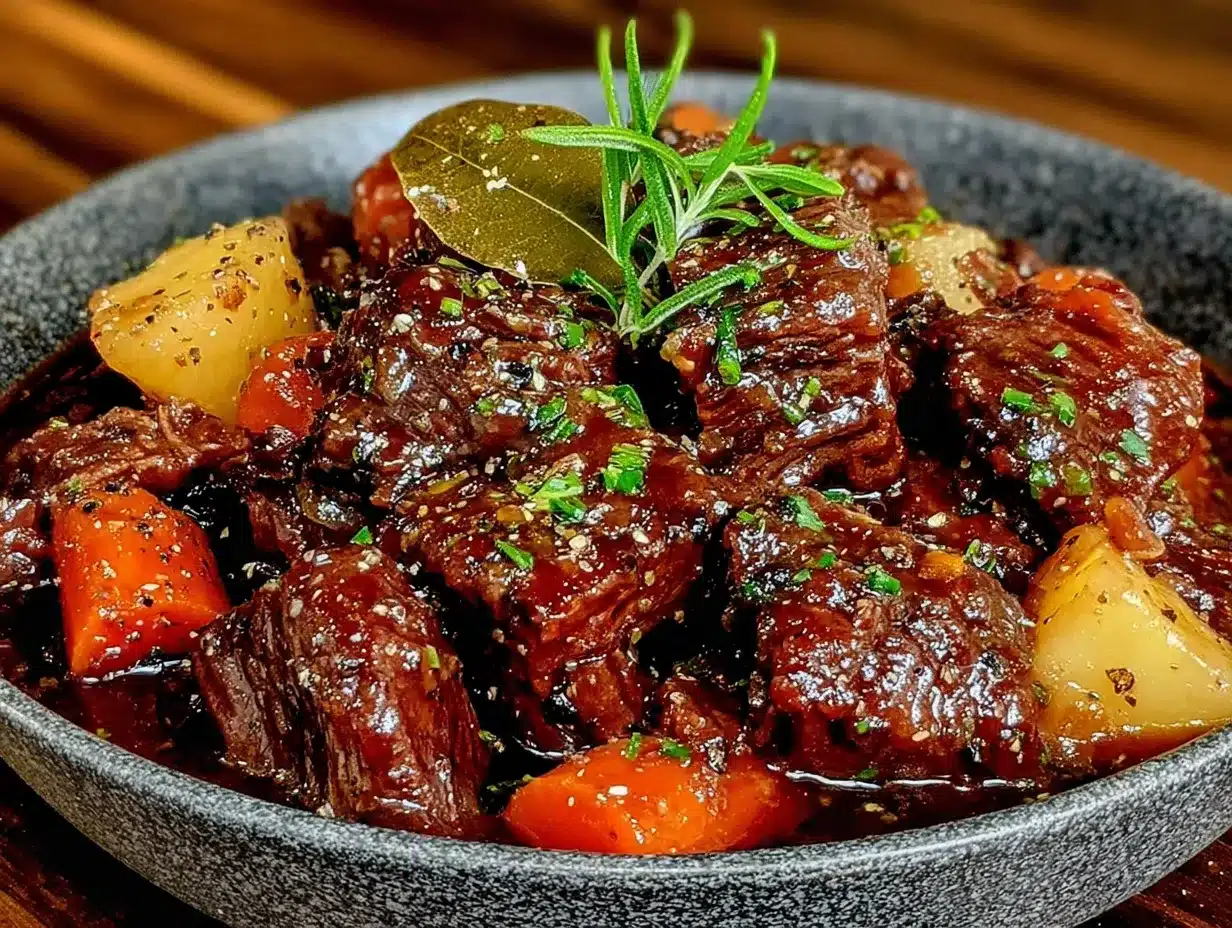
This was supposed to be a slow braised short rib situation. I had the whole thing planned out in my head—a Sunday afternoon project with a fancy bottle of wine and enough time to let the meat get that fall apart tenderness. Except it was a Tuesday, I’d forgotten to defrost the short ribs, and the only beef in my freezer were these sad looking chunks of stew meat I’d bought on a whim. I grabbed the wrong bottle of wine too—something a friend had brought over that was way too bold for the delicate sauce I’d planned. The pot was too hot, I was already ten minutes behind schedule, and honestly, I almost just ordered pizza.
What came out of that pot was nothing like the plan. And it was better. Way better. The meat, even without hours of braising, turned out spoon tender. The wine, that “wrong” bottle, gave the broth this deep, almost jammy richness I’d never gotten from my usual cooking wines. I stood there over the stove, tasting it straight from the ladle, and I actually laughed. I mean, how many times does a kitchen disaster actually work out? You know that feeling when you’re sure dinner is ruined, and then somehow it’s the best thing you’ve made all month? That was this stew.
I’ve made it at least a dozen times since that Tuesday night. It’s become my go to for those nights when I need something that tastes like I spent all day cooking but actually comes together in about an hour. The secret—and I’m still a little embarrassed to admit this—is that I never went back to the original plan. This happy accident of a recipe, with its shortcut cuts of beef and that bold, unexpected wine, is just better. It’s proof that sometimes the best dishes come from the moments we stop trying so hard.
Why You’ll Love This Recipe
This one pot red wine beef stew is the kind of recipe that makes you look like a hero on a weeknight. It’s rich, deeply flavorful, and tastes like it simmered for hours—but it’s on your table in about an hour and fifteen minutes. Let me break down exactly why this will become your new favorite comfort meal.
- Quick & Easy: From fridge to table in about 75 minutes. No marinating, no complicated steps, no all day simmering. Just one pot and about 20 minutes of active prep.
- Simple Ingredients: You probably have most of these in your kitchen right now. Onions, carrots, garlic, flour, beef broth. The only “special” ingredient is a decent bottle of red wine, and honestly, you can use whatever you have open.
- Perfect for Weeknights: This is built for busy people. Minimal cleanup (one pot!), mostly hands off cooking, and it reheats beautifully for leftovers the next day.
- Crowd Pleaser: I’ve served this to picky eaters, to my in laws, to friends who “don’t really like stew.” Every single person has asked for the recipe. It’s that good.
- Unbelievably Delicious: The wine adds this incredible depth that you just don’t get from broth alone. The beef gets tender in a way that seems impossible for such a quick cook time. And the gravy? You’ll want to eat it with a spoon.
What makes this recipe different from every other beef stew out there is the technique. Instead of browning the meat in batches (which takes forever and makes a mess), I use a method that lets the meat develop flavor while it simmers. It’s a little unconventional, but trust me—it works. This isn’t just another version of beef stew. It’s the one that’s going to save your Tuesday nights.
What Ingredients You Will Need
This recipe uses simple, honest ingredients to build big flavor without any fuss. Most of these are pantry staples or easy to find at any grocery store. Here’s what you’ll need and why each one matters.
For the Stew Base
- 2 pounds beef chuck stew meat, cut into 1½ inch cubes – Look for well marbled meat with some fat running through it. That fat is what keeps the meat tender during cooking. I usually buy pre cut stew meat from the store to save time, but if you’re cutting your own, chuck is the best cut for this.
- 2 tablespoons olive oil – Use a good quality olive oil for browning. Avocado oil works too if that’s what you have.
- 1 large yellow onion, diced – Yellow onions have the best flavor for stew. They get sweet and soft as they cook. White onions work in a pinch, but skip red onions here—they’re too sharp.
- 3 cloves garlic, minced – Fresh garlic is non negotiable here. The jarred stuff just doesn’t have the same punch. I mince mine with a microplane for the best texture.
- 4 medium carrots, peeled and cut into 1 inch chunks – Carrots add sweetness and color. I like them cut chunky so they hold their shape during cooking.
- 3 celery stalks, cut into 1 inch pieces – Celery adds that classic stew flavor base. Don’t skip it—it makes a difference.
- 3 tablespoons all purpose flour – This thickens the stew as it cooks. For a gluten free option, use 2 tablespoons cornstarch mixed with 2 tablespoons cold water, added at the end.
For the Liquid & Seasoning
- 1½ cups dry red wine – This is the star of the show. Use something you’d actually drink—I recommend a Cabernet Sauvignon, Merlot, or a bold Zinfandel. The wine flavor concentrates as it cooks, so don’t use cooking wine or anything you wouldn’t enjoy sipping. My personal favorite is a California Cabernet—it gives the stew this beautiful deep purple color and a rich, almost fruity depth.
- 2 cups beef broth – Use low sodium broth so you can control the salt level. I like Better Than Bouillon beef base mixed with water—it has a richer flavor than most boxed broths.
- 1 can (14.5 ounces) diced tomatoes, undrained – The tomatoes add acidity and body to the broth. Fire roasted tomatoes are especially good here if you can find them.
- 2 bay leaves – These add a subtle herbal note. Remove them before serving.
- 1 teaspoon dried thyme – Thyme and beef are a classic pairing. If you have fresh thyme, use 1 tablespoon of leaves.
- 1 teaspoon salt – Start with this and adjust at the end. Different broths have different salt levels.
- ½ teaspoon black pepper – Fresh ground is best. It makes a noticeable difference.
- 2 cups frozen peas – Added at the very end for color and sweetness. No need to thaw them first.
- 2 tablespoons fresh parsley, chopped (for garnish) – Optional but nice for a pop of green and freshness.
Equipment Needed
You don’t need a fancy kitchen to make this stew. Here’s what you’ll actually use:
- A large Dutch oven or heavy bottomed pot (5 to 6 quart) – This is your best friend for one pot cooking. The heavy bottom distributes heat evenly and prevents burning. If you don’t have a Dutch oven, a large stainless steel pot with a thick bottom works fine. Avoid thin nonstick pots—they don’t hold heat well enough for proper browning.
- A sharp chef’s knife – You’ll be chopping vegetables and meat. A dull knife makes this job miserable. I use a 8 inch chef’s knife from Victorinox—it’s affordable and stays sharp.
- A cutting board – Wood or plastic, doesn’t matter. Just make sure it’s big enough to hold all your ingredients.
- A wooden spoon or spatula – For stirring and scraping up the browned bits from the bottom of the pot. Those bits are pure flavor.
- Measuring cups and spoons – For the wine, broth, and seasonings. Eyeballing it works for some things, but for this recipe, accurate measurements help the flavor balance.
- A ladle – For serving. This is a soupy stew, so a ladle makes it easier.
That’s it. No special gadgets, no expensive tools. Just basic kitchen equipment you probably already own.
Preparation Method
Alright, let’s get cooking. This is going to be straightforward and mostly hands off. Here’s exactly how to do it.
- Prep your ingredients first. Chop the onion, mince the garlic, cut the carrots and celery, and pat the beef dry with paper towels. Drying the beef is important—wet meat won’t brown properly. Have everything ready before you start cooking. Trust me, you don’t want to be chopping onions while the oil is smoking.
- Heat the olive oil in your Dutch oven over medium high heat. Let it get shimmering hot—about 2 minutes. You want it hot enough that when you add the beef, it sizzles immediately.
- Add the beef in a single layer. Don’t crowd the pot. If your pot isn’t big enough, do this in two batches. Let the beef cook undisturbed for 3 to 4 minutes until the bottom is deeply browned. Then flip and brown the other side for another 2 to 3 minutes. Don’t stir it constantly—you want that crust to form. The meat won’t be cooked through, and that’s fine.
- Remove the beef to a plate and set aside. Leave any browned bits and fat in the pot. Those bits are flavor gold.
- Reduce heat to medium and add the onion, carrots, and celery. Cook for 5 to 6 minutes, stirring occasionally, until the vegetables start to soften and the onions turn translucent. If the pot looks dry, add a splash more oil.
- Add the minced garlic and cook for 1 minute more until fragrant. Garlic burns fast, so keep stirring.
- Sprinkle the flour over the vegetables and stir to coat. Cook for 1 to 2 minutes, stirring constantly. This cooks the raw flour taste out and starts the thickening process. The mixture will look pasty—that’s normal.
- Slowly pour in the red wine, stirring constantly. Scrape up all those browned bits from the bottom of the pot. The wine will deglaze the pan and incorporate all that flavor into the broth. Let the wine simmer for 2 to 3 minutes, until it reduces slightly and smells less boozy.
- Add the beef broth, diced tomatoes (with their juices), bay leaves, thyme, salt, and pepper. Stir everything together. Return the browned beef to the pot, along with any juices that accumulated on the plate.
- Bring the stew to a boil, then reduce heat to low. Cover the pot with a lid slightly ajar (leave a small crack for steam to escape) and let it simmer gently for 45 to 50 minutes. Stir occasionally to prevent sticking. The stew should be bubbling softly, not furiously. If it’s boiling hard, turn the heat down.
- After 45 minutes, check the beef. It should be fork tender—meaning you can easily pierce it with a fork. If it’s still tough, let it simmer for another 10 to 15 minutes. Different cuts of meat vary in cook time.
- Stir in the frozen peas. Let them cook for 2 to 3 minutes until bright green and heated through. Taste the broth and adjust salt and pepper if needed. Remove the bay leaves.
- Let the stew rest for 5 to 10 minutes off the heat. This allows the flavors to meld and the stew to thicken slightly more as it cools.
Serve hot, garnished with fresh parsley if you like. The stew will be thick, rich, and deeply savory with that beautiful wine flavor running through every bite.
Cooking Tips & Techniques
I’ve made this stew more times than I can count, and I’ve learned a few things the hard way. Here are my best tips to make sure yours turns out perfect every time.
Don’t skip the browning step. I know it’s tempting to just dump everything in the pot and save time. I’ve done it. And every time, the stew ends up tasting flat. That browning creates the Maillard reaction—a fancy term for the chemical process that gives meat its deep, savory flavor. It’s worth the extra 10 minutes. Trust me.
Use a wine you actually like. I learned this lesson after making a stew with a cheap bottle of “cooking wine” that left a weird, metallic aftertaste. The wine concentrates as it simmers, so any flaws in the wine will be amplified. You don’t need to spend $20, but grab something you’d happily drink a glass of. My go to is a $10 bottle of Cabernet from Trader Joe’s—it works perfectly.
Patience with the simmer. Low and slow is the name of the game here. If you boil the stew aggressively, the meat will toughen up instead of getting tender. You want the liquid to be at a gentle simmer—just a few lazy bubbles breaking the surface. I’ve ruined a batch by cranking the heat because I was hungry. Don’t be like me.
Thicken it your way. Some people like their stew thick enough to stand a spoon in. Others prefer it soupier. If you want it thicker after the 45 minute simmer, mix 1 tablespoon cornstarch with 2 tablespoons cold water to make a slurry, stir it in, and let it cook for 3 more minutes. If it’s too thick, add a splash of broth or water.
Make it ahead. This stew actually gets better after a day in the fridge. The flavors meld and deepen overnight. So if you have time, make it a day ahead and reheat it gently on the stove. It’s a lifesaver for busy nights—just reheat and serve.
Variations & Adaptations
One of the best things about this stew is how flexible it is. Here are some ways to make it your own.
Vegetable Swap: Not a fan of peas? Leave them out. Want more veggies? Add a cup of chopped mushrooms with the onions—they add an earthy depth that’s fantastic. You can also toss in some diced potatoes (about 1½ cups) with the broth. Just make sure to cut them into 1 inch cubes so they cook evenly. I’ve done a version with sweet potatoes instead of carrots, and it was surprisingly good—the sweetness balances the wine beautifully.
Herb Variations: Thyme is classic, but rosemary works wonderfully too. Add 1 teaspoon dried rosemary (or 1 tablespoon fresh) with the other seasonings. For a more Mediterranean twist, try adding a teaspoon of smoked paprika and a pinch of cinnamon. It sounds weird, but the cinnamon brings out the sweetness of the tomatoes and wine.
Dietary Adaptations: To make this gluten free, skip the flour and use the cornstarch slurry method I mentioned earlier. For a lower sodium version, use unsalted broth and add salt gradually at the end. You can also use a non alcoholic red wine or beef broth instead of wine for a kid friendly version—just add an extra tablespoon of balsamic vinegar to mimic the wine’s acidity.
Different Cooking Methods: This works great in a slow cooker. After browning the beef and sautéing the vegetables, transfer everything to a slow cooker and cook on low for 6 to 8 hours or high for 3 to 4 hours. Add the peas in the last 10 minutes. For an Instant Pot, use the sauté function for browning, then pressure cook on high for 25 minutes with a natural release. The texture is slightly different but still delicious.
Make it Spicy: Add a pinch of red pepper flakes with the garlic for a subtle heat. Or stir in a tablespoon of harissa paste at the end for a North African inspired twist. I tried this once on a whim and it was incredible—the spicy warmth paired perfectly with the rich wine broth.
Serving & Storage Suggestions
This stew is a complete meal in a bowl, but here’s how to make it even better.
Serve it hot straight from the pot. Ladle it into deep bowls and top with fresh parsley and a crack of black pepper. It’s fantastic with crusty bread for sopping up the broth—I like a good sourdough or a crusty baguette. For a heartier meal, serve it over mashed potatoes, egg noodles, or creamy polenta. The stew soaks into whatever you put it on, and it’s pure comfort.
Pairing suggestions: A simple green salad with a tangy vinaigrette cuts through the richness nicely. For drinks, the same red wine you cooked with is a natural pairing. I also love this with a dark beer like a stout or porter—the roasted notes complement the beef perfectly.
Storage: Let the stew cool completely, then transfer it to an airtight container. It will keep in the refrigerator for up to 4 days. The flavors actually get better after a day or two. To freeze, portion the stew into freezer safe containers or bags, leaving some headroom for expansion. It freezes well for up to 3 months. Thaw overnight in the fridge before reheating.
Reheating: Reheat gently on the stovetop over medium low heat, stirring occasionally. Add a splash of broth or water if the stew has thickened too much. You can also reheat individual portions in the microwave—just cover the bowl and heat in 1 minute increments, stirring in between. The texture stays great either way.
Make ahead tip: This stew is a dream for meal prep. Make a double batch on Sunday, portion it out, and you have lunch or dinner ready all week. It’s one of those rare recipes that tastes better on day two or three, so don’t be shy about making extra.
Nutritional Information & Benefits
Here’s the estimated nutritional breakdown per serving (based on 6 servings):
| Nutrient | Amount |
|---|---|
| Calories | 385 |
| Protein | 32g |
| Fat | 14g |
| Carbohydrates | 18g |
| Fiber | 4g |
| Sugar | 8g |
| Sodium | 680mg |
| Iron | 4.5mg |
Health benefits: This stew is packed with protein from the beef, which helps keep you full and supports muscle health. The carrots and celery provide vitamin A and fiber, while the tomatoes are rich in lycopene, an antioxidant. Red wine, in moderation, contains resveratrol, which has been linked to heart health. Plus, the slow simmering method helps retain nutrients in the vegetables.
Dietary considerations: This recipe is dairy free and nut free. For gluten free, use the cornstarch thickener. It’s also relatively low in added sugars—the sweetness comes naturally from the vegetables and wine. If you’re watching your sodium, use low sodium broth and go easy on the added salt.
From a personal perspective, I love that this stew feels indulgent but is actually pretty balanced. It’s the kind of meal that fills you up without weighing you down. Perfect for those nights when you want comfort food that still makes you feel good.
Conclusion
This one pot red wine beef stew is proof that the best recipes often come from the most unexpected places. What started as a Tuesday night disaster turned into my most requested dish—and now it can be yours too. It’s rich, comforting, and comes together in about an hour with just one pot to clean. Honestly, what more could you ask for on a busy weeknight?
I’d love to hear how this turns out for you. Did you try any of the variations? Did you discover your own happy accident along the way? Drop a comment below and let me know—I read every single one. And if you loved this recipe, please share it with a friend who needs a good weeknight dinner win. We all deserve a little comfort in a bowl, especially on a Tuesday.
Until next time, happy cooking—and don’t be afraid to mess up. You never know what you might create.
Frequently Asked Questions
Can I use a different cut of beef?
Yes, you can use beef brisket or round steak, but chuck is the best choice because it has enough fat to stay tender during the shorter cook time. Leaner cuts may turn out tough.
Can I make this without wine?
Absolutely. Substitute the wine with an equal amount of beef broth plus 2 tablespoons of balsamic vinegar or red wine vinegar. The vinegar mimics the acidity of the wine.
Why is my stew watery?
This usually happens if the stew wasn’t simmered long enough to reduce and thicken, or if you added too much liquid. Let it simmer uncovered for 10 more minutes to thicken, or stir in a cornstarch slurry.
Can I add potatoes to this stew?
Yes! Add 1½ cups of diced potatoes (Yukon Gold or Russet work well) along with the broth. They’ll cook perfectly in the 45 minute simmer time. Just cut them into 1 inch cubes for even cooking.
How do I prevent the beef from being tough?
Make sure you’re simmering gently, not boiling. High heat can toughen the meat. Also, don’t skip the browning step—it develops flavor, but the low simmer is what actually tenderizes the beef. If it’s still tough after 45 minutes, give it another 10 to 15 minutes.
PrintEasy One-Pot Red Wine Beef Stew: Best Comfort Food
This one-pot red wine beef stew is rich, deeply flavorful, and tastes like it simmered for hours—but it’s on your table in about an hour and fifteen minutes. It’s the perfect weeknight comfort meal that turns a kitchen disaster into a delicious success.
- Prep Time: 20 minutes
- Cook Time: 55 minutes
- Total Time: 1 hour 15 minutes
- Yield: 6 servings 1x
- Category: Main Course
- Cuisine: American
Ingredients
- 2 pounds beef chuck stew meat, cut into 1½ inch cubes
- 2 tablespoons olive oil
- 1 large yellow onion, diced
- 3 cloves garlic, minced
- 4 medium carrots, peeled and cut into 1 inch chunks
- 3 celery stalks, cut into 1 inch pieces
- 3 tablespoons all purpose flour
- 1½ cups dry red wine (Cabernet Sauvignon, Merlot, or Zinfandel)
- 2 cups beef broth (low sodium)
- 1 can (14.5 ounces) diced tomatoes, undrained
- 2 bay leaves
- 1 teaspoon dried thyme
- 1 teaspoon salt
- ½ teaspoon black pepper
- 2 cups frozen peas
- 2 tablespoons fresh parsley, chopped (for garnish)
Instructions
- Prep your ingredients first. Chop the onion, mince the garlic, cut the carrots and celery, and pat the beef dry with paper towels.
- Heat the olive oil in your Dutch oven over medium high heat until shimmering hot, about 2 minutes.
- Add the beef in a single layer. Let it cook undisturbed for 3 to 4 minutes until deeply browned, then flip and brown the other side for another 2 to 3 minutes. Remove the beef to a plate and set aside.
- Reduce heat to medium and add the onion, carrots, and celery. Cook for 5 to 6 minutes, stirring occasionally, until softened and onions are translucent.
- Add the minced garlic and cook for 1 minute more until fragrant.
- Sprinkle the flour over the vegetables and stir to coat. Cook for 1 to 2 minutes, stirring constantly.
- Slowly pour in the red wine, stirring constantly and scraping up browned bits from the bottom. Let the wine simmer for 2 to 3 minutes until reduced slightly.
- Add the beef broth, diced tomatoes (with their juices), bay leaves, thyme, salt, and pepper. Stir to combine. Return the browned beef to the pot along with any accumulated juices.
- Bring the stew to a boil, then reduce heat to low. Cover the pot with a lid slightly ajar and let it simmer gently for 45 to 50 minutes, stirring occasionally.
- After 45 minutes, check the beef for fork tenderness. If still tough, simmer for another 10 to 15 minutes.
- Stir in the frozen peas and cook for 2 to 3 minutes until bright green and heated through. Taste and adjust salt and pepper. Remove bay leaves.
- Let the stew rest for 5 to 10 minutes off the heat before serving. Serve hot, garnished with fresh parsley.
Notes
For a gluten-free version, skip the flour and use a cornstarch slurry (1 tablespoon cornstarch mixed with 2 tablespoons cold water) added at the end. The stew gets better after a day in the fridge—make it ahead for deeper flavor. Use a wine you enjoy drinking; cheap cooking wine can leave a metallic aftertaste.
Nutrition
- Serving Size: 1 serving (about 1.5
- Calories: 385
- Sugar: 8
- Sodium: 680
- Fat: 14
- Saturated Fat: 4
- Carbohydrates: 18
- Fiber: 4
- Protein: 32
Keywords: beef stew, red wine stew, one-pot meal, comfort food, weeknight dinner, easy stew recipe