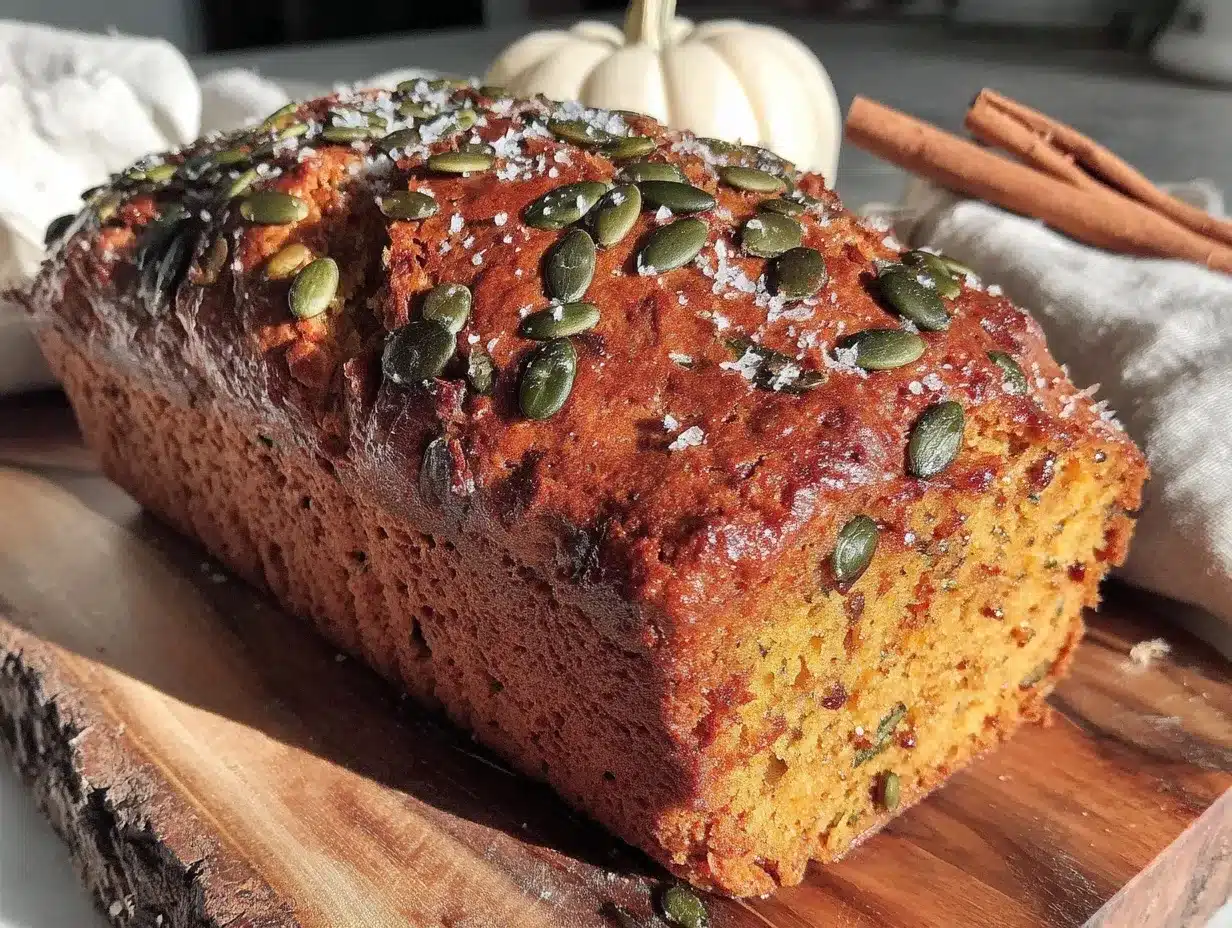
I thought adding pumpkin to sourdough bread would just make a soggy mess. It took about three attempts and a few too many sticky hands for that notion to be proven wrong in the most delicious way. You know, pumpkin seems like it should be relegated to pies and lattes, but when I tossed some into my sourdough starter along with a handful of toasted pepitas and a pinch of autumn spices, something unexpectedly wonderful happened. The crust came out crisp and crackly, the crumb moist but not gummy, and the spices whispered just enough warmth without overpowering the natural tang of the sourdough.
That first loaf didn’t just taste like fall; it felt like it, with the scent of cinnamon and nutmeg curling through the kitchen, mingling with the earthy aroma of freshly baked bread. Honestly, it surprised me how well the pumpkin’s natural sugars worked with the fermentation process. It wasn’t just a seasonal stunt—it was a loaf that stuck around in my rotation for weeks, especially on mornings when a slather of butter just didn’t cut it alone. This perfect pumpkin sourdough bread with toasted pepitas and autumn spices is a quiet reminder that sometimes, the simplest ideas—when given a little room to breathe—turn out better than you expect.
It’s the kind of bread that invites you to slow down, take a bite, and maybe even close your eyes for a moment. That’s why I keep coming back to it, loaf after loaf.
Why You’ll Love This Recipe
- Quick & Easy: This pumpkin sourdough bread recipe comes together in under 4 hours of active time, perfect for busy bakers who want impressive results without endless fuss.
- Simple Ingredients: No need to hunt down exotic spices or fancy pumpkin varieties—basic pantry staples and canned pumpkin puree work just fine.
- Perfect for Autumn Gatherings: Whether you’re hosting a cozy brunch or packing lunchboxes for school, this bread brings a comforting seasonal touch.
- Crowd-Pleaser: The toasted pepitas add a nutty crunch that both kids and adults rave about, making it a versatile favorite.
- Unbelievably Delicious: The blend of sourdough tang, pumpkin sweetness, and warm spices creates a complex flavor profile that feels like comfort food with a twist.
- This isn’t just another pumpkin bread. The slow fermentation of the sourdough starter brings depth that you won’t find in quick breads, and the pepitas toasted just right add a texture that’s downright addictive.
- It’s the kind of loaf that turns a simple breakfast or snack into something a bit more special without adding stress.
What Ingredients You Will Need
This perfect pumpkin sourdough bread recipe uses simple, wholesome ingredients to deliver bold flavor and satisfying texture without the fuss. Most of these are pantry staples, and the pumpkin can be fresh or canned depending on your season and preference.
- Active sourdough starter: 100g (about ½ cup), bubbly and refreshed (I trust my own starter, but commercial starters work well too)
- All-purpose flour: 400g (3 ⅓ cups) – you can swap half for whole wheat for a heartier loaf
- Pumpkin puree: 150g (⅔ cup), canned or homemade (fresh is great in season, but canned is reliable year-round)
- Warm water: 200ml (¾ cup + 1 tbsp), around 80°F (27°C) to encourage fermentation
- Salt: 10g (1 ½ tsp) – I prefer fine sea salt for even distribution
- Brown sugar: 20g (1 ½ tbsp) – adds a subtle caramel note and helps with crust color
- Ground cinnamon: 1 tsp – the star autumn spice here
- Ground nutmeg: ½ tsp – a little goes a long way
- Ground ginger: ¼ tsp – optional but adds a subtle zing
- Toasted pepitas (pumpkin seeds): 60g (½ cup) – lightly salted and toasted for crunch
If you’re feeling adventurous, a splash of vanilla extract (about ½ tsp) can add an extra layer of warmth. For gluten-free adaptations, try substituting with an equal mix of gluten-free flours and adding xanthan gum for structure.
Equipment Needed
- Large mixing bowl: For combining ingredients comfortably
- Dutch oven or heavy oven-safe pot with lid: Ideal for getting that perfect crust; a baking stone or cast-iron skillet can work as alternatives
- Dough scraper or bench knife: Makes handling sticky dough much easier (I swear by mine for shaping)
- Kitchen scale: For precise measurements—baking is a science, but you’ll thank yourself later
- Proofing basket or bowl lined with a tea towel: Helps the dough keep its shape during the final rise
- Pastry brush: For brushing water or egg wash if desired (optional)
In my experience, investing in a good quality Dutch oven really pays off for sourdough breads—the steam it traps results in that coveted crackly crust. If you don’t have one, a cast iron skillet with a lid or a heavy roasting pan covered tightly with foil can work in a pinch.
Preparation Method
- Mix the starter, pumpkin puree, and warm water: In your large bowl, combine 100g active sourdough starter, 150g pumpkin puree, and 200ml warm water. Stir gently until mostly combined. This should take about 5 minutes. The mixture will be slightly thick but fluid enough to mix easily.
- Add flour, spices, sugar, and salt: Add 400g all-purpose flour, 1 tsp cinnamon, ½ tsp nutmeg, ¼ tsp ginger, 20g brown sugar, and 10g salt to the wet ingredients. Mix with a wooden spoon or your hands until a shaggy dough forms. This should take about 10 minutes.
- Autolyse and rest: Cover the bowl with a damp towel and let the dough rest for 30 minutes. This helps hydrate the flour and kickstarts gluten development.
- Stretch and fold: Over the next 2 hours, perform 3 sets of stretch-and-fold every 30 minutes. To do this, wet your hand, grab one side of the dough, stretch it upward gently, and fold it over the rest. Rotate the bowl and repeat 3 more times. This builds the dough’s strength without kneading.
- Incorporate toasted pepitas: After the final stretch and fold, gently fold in 60g toasted pepitas until evenly distributed. This step should be gentle to avoid deflating the dough.
- Bulk ferment: Cover and let the dough rise at room temperature for 2-3 hours, or until it has roughly doubled in size. You’ll notice the dough will feel airy and slightly jiggly.
- Shape the dough: Lightly flour your work surface and turn the dough out gently. Shape it into a tight round loaf by folding edges into the center and then tucking under. Place seam-side up into a well-floured proofing basket or lined bowl.
- Final proof: Cover with a towel and proof for 1-2 hours at room temperature or overnight in the fridge for enhanced flavor and texture.
- Preheat the oven: Place your Dutch oven inside and preheat to 450°F (230°C) for at least 30 minutes before baking. Hot, steamy ovens are key.
- Bake your loaf: Carefully transfer the dough onto parchment paper, score the top with a sharp blade, and place it into the hot Dutch oven. Cover with the lid and bake for 20 minutes. Remove the lid and bake for another 20-25 minutes until deep golden and crusty.
- Cool completely: Let the bread cool on a wire rack for at least 2 hours before slicing. The crumb finishes setting during this time, so patience pays off.
Cooking Tips & Techniques
Getting pumpkin sourdough bread just right can be a balancing act, but a few lessons from my kitchen can save you some headaches. First, don’t skip the stretch-and-folds; they build up gluten strength, especially important because the pumpkin adds moisture that can weigh dough down. Trust me, I’ve had loaves that looked like sad blobs before I gave this technique a real shot.
Also, watch your hydration levels carefully. Pumpkin puree contains a lot of water, so reducing the added water slightly if your dough feels too wet can help avoid a gummy crumb. That said, don’t be afraid of a slightly sticky dough—it’s normal for pumpkin breads.
Toasting the pepitas separately before folding them in is a game changer. It brings out their nutty flavor and adds the perfect crunch that contrasts with the soft crumb. I learned this the hard way after biting into a loaf with soft, chewy seeds and feeling a little let down.
Finally, scoring the loaf before baking isn’t just for looks. It gives the bread room to expand evenly and can prevent random cracks. A razor blade or very sharp knife works best, and a couple of quick, confident slashes are better than dragging the blade slowly.
Variations & Adaptations
- Nutty Boost: Swap pepitas for chopped toasted walnuts or pecans for a different crunch and flavor profile.
- Sweet Twist: Add ½ cup dried cranberries or raisins into the dough for bursts of chewy sweetness that complement the spices.
- Spice Swap: Experiment with cardamom or allspice instead of nutmeg for a unique aromatic spin.
- Gluten-Free Version: Use a blend of gluten-free flours with a sourdough starter adapted for gluten-free baking, adding xanthan gum to mimic gluten’s elastic properties.
- Personally, I once added a swirl of cinnamon sugar before shaping the dough, which created a delightful marbled effect and extra cinnamon punch—definitely worth trying if you like a sweeter loaf.
Serving & Storage Suggestions
This pumpkin sourdough bread is best served at room temperature or lightly toasted to bring out the spices and crunch of the pepitas. It pairs beautifully with creamy spreads like herbed butter or honey goat cheese. For a cozy breakfast, try it alongside a bowl of warm cinnamon-spiced applesauce or with your favorite pumpkin-inspired coffee.
Store leftover bread in a paper bag or bread box at room temperature for up to 3 days to keep the crust crisp. For longer storage, slice and freeze the bread in airtight bags; toasted slices come back to life perfectly from the freezer.
Reheating in a toaster or a warm oven (about 350°F/175°C for 5-7 minutes) refreshes the crust and soft crumb nicely. You’ll find the flavors meld even more after a day or two, so if you can wait, it’s worth it.
Nutritional Information & Benefits
This pumpkin sourdough bread offers a nutrient-rich alternative to standard white bread. Pumpkin brings beta-carotene, fiber, and vitamin A to the mix, while the sourdough fermentation aids digestion and may help with nutrient absorption.
On average, a slice (about 60g) contains roughly 140 calories, 4g protein, 1.5g fat, and 25g carbohydrates, with the added bonus of fiber from the pumpkin and whole wheat flour if used. Pepitas add healthy fats, magnesium, and zinc, making this loaf a wholesome choice for autumn mornings.
Of course, it contains gluten and seeds, so it’s not suitable for those with related allergies, but adaptations can be made for many dietary needs.
Conclusion
This perfect pumpkin sourdough bread with toasted pepitas and autumn spices isn’t just a seasonal novelty—it’s quickly become a staple in my kitchen. It strikes that rare balance between rustic and refined, hearty but soft, familiar yet a little surprising. I love how it turns simple moments into something a little more comforting and special.
Feel free to tweak the spices or nuts to fit your taste or the season—this bread embraces creativity and welcomes your personal touch. Baking it yourself is a rewarding way to celebrate fall’s flavors without the fuss.
When you give this recipe a try, I’d love to hear how your loaf turns out or any spin you put on it. After all, the best bread is the one you make your own.
Frequently Asked Questions
Can I use fresh pumpkin instead of canned?
Yes, fresh pumpkin puree works well. Roast and puree your pumpkin first, then measure the same amount as canned. Fresh puree may add a slight variation in moisture, so adjust water accordingly.
How do I know if my sourdough starter is active enough?
It should double in size within 4-6 hours after feeding and be bubbly with a pleasant tangy smell. A simple float test—dropping a spoonful in water to see if it floats—can also indicate readiness.
Why is my bread crust too thick or hard?
It might be due to baking temperature or steam levels. Using a covered Dutch oven traps steam and softens the crust during the first baking phase, resulting in a crisp but not overly hard crust.
Can I make this bread without a Dutch oven?
Absolutely. Use a baking stone or heavy tray preheated in the oven and place a pan of hot water on the bottom rack to create steam. This helps develop a good crust.
How long does the bread stay fresh?
At room temperature, it’s best eaten within 3 days. You can freeze slices for up to 3 months and toast them directly from the freezer.
For more baking inspiration, you might enjoy my moist lemon blueberry zucchini bread or the moist banana zucchini chocolate chip muffins, which are great for using up seasonal produce with a touch of sweetness.
Pin This Recipe!
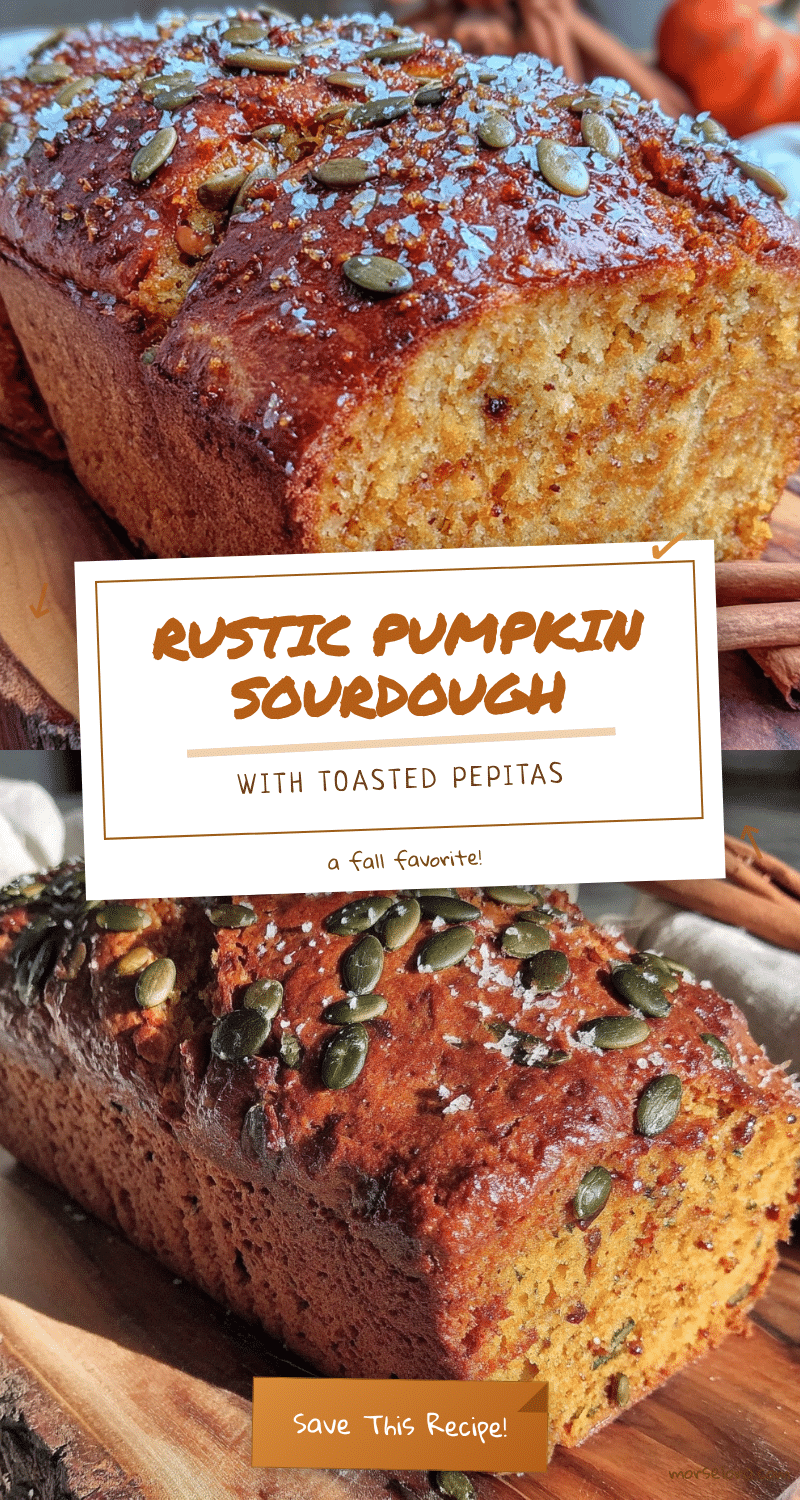
Perfect Pumpkin Sourdough Bread Recipe with Toasted Pepitas and Autumn Spices

A moist and flavorful pumpkin sourdough bread with toasted pepitas and warm autumn spices, featuring a crisp crust and tender crumb perfect for fall gatherings.
- Prep Time: 45 minutes
- Cook Time: 45 minutes
- Total Time: 4 hours 30 minutes
- Yield: 1 loaf (about 12 slices) 1x
- Category: Bread
- Cuisine: American
Ingredients
- 100g (about ½ cup) active sourdough starter, bubbly and refreshed
- 400g (3 ⅓ cups) all-purpose flour (can swap half for whole wheat)
- 150g (⅔ cup) pumpkin puree, canned or homemade
- 200ml (¾ cup + 1 tbsp) warm water, around 80°F (27°C)
- 10g (1 ½ tsp) fine sea salt
- 20g (1 ½ tbsp) brown sugar
- 1 tsp ground cinnamon
- ½ tsp ground nutmeg
- ¼ tsp ground ginger (optional)
- 60g (½ cup) toasted pepitas (pumpkin seeds), lightly salted
Instructions
- In a large mixing bowl, combine 100g active sourdough starter, 150g pumpkin puree, and 200ml warm water. Stir gently until mostly combined, about 5 minutes.
- Add 400g all-purpose flour, 1 tsp cinnamon, ½ tsp nutmeg, ¼ tsp ginger, 20g brown sugar, and 10g salt to the wet ingredients. Mix until a shaggy dough forms, about 10 minutes.
- Cover the bowl with a damp towel and let the dough rest for 30 minutes to hydrate the flour.
- Perform 3 sets of stretch-and-fold every 30 minutes over 2 hours to build dough strength.
- Gently fold in 60g toasted pepitas until evenly distributed.
- Cover and let the dough rise at room temperature for 2-3 hours until roughly doubled in size.
- Lightly flour your work surface and shape the dough into a tight round loaf. Place seam-side up into a well-floured proofing basket or bowl.
- Cover and proof for 1-2 hours at room temperature or overnight in the fridge for enhanced flavor.
- Preheat the oven to 450°F (230°C) with a Dutch oven inside for at least 30 minutes.
- Transfer the dough onto parchment paper, score the top with a sharp blade, place into the hot Dutch oven, cover, and bake for 20 minutes.
- Remove the lid and bake for another 20-25 minutes until deep golden and crusty.
- Cool the bread completely on a wire rack for at least 2 hours before slicing.
Notes
Do not skip the stretch-and-fold steps to build gluten strength. Adjust water slightly if dough feels too wet due to pumpkin moisture. Toast pepitas separately for best crunch. Score the loaf before baking to allow even expansion. For gluten-free adaptation, use gluten-free flours and xanthan gum.
Nutrition
- Serving Size: 1 slice (about 60g)
- Calories: 140
- Fat: 1.5
- Carbohydrates: 25
- Protein: 4
Keywords: pumpkin sourdough bread, toasted pepitas, autumn spices, fall bread, homemade sourdough, pumpkin bread, sourdough recipe